← Home · Investigation

SPT Testing in Markham: Reliable Soil Data for Ontario Construction

Together, we solve the challenges of tomorrow.

LEARN MORE →

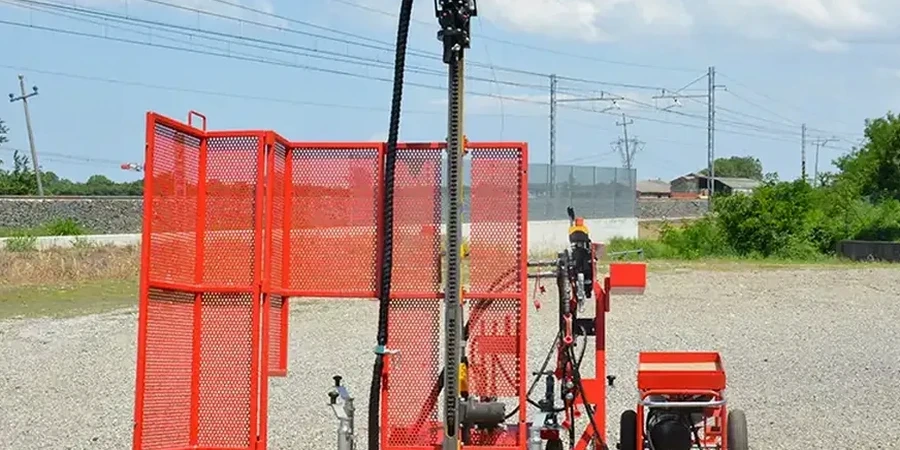
A mid-rise residential project on Highway 7 recently encountered a buried valley filled with saturated silts that weren't visible on the surface — a scenario that repeats itself across Markham's post-glacial landscape. The contractor halted excavation when the excavator bucket started pulling up material that looked more like soup than soil. Our crew mobilized a CME-75 rig within 48 hours, drove the split-spoon sampler through 18 meters of fill and native till, and delivered N-values that let the structural engineer redesign the footings before the pour schedule slipped. That is what proper SPT testing does: it replaces expensive guesswork with defensible numbers. In a municipality where the Rouge River watershed and the Oak Ridges Moraine converge, understanding what lies beneath the topsoil isn't optional — it is the difference between a foundation that settles predictably and one that becomes a liability. We pair the SPT blow count data with laboratory grain-size analysis to classify the strata precisely, because knowing the N-value without knowing whether you are in a clay or a silt changes the bearing capacity calculation entirely.

An N-value without energy correction is like a recipe without oven temperature — the number exists, but the result is unreliable.

Process and scope

Markham's winter freeze-thaw cycles and summer stormwater infiltration create a testing window that demands careful scheduling. The glacial till that underlies much of the city — a dense, unsorted mix of clay, silt, sand, and cobbles — can produce N-values that spike from 15 to over 50 in less than a meter. Interpreting those transitions correctly requires more than just counting blows; it requires understanding how the Don River till and the younger Halton till behave differently under load. Our field technicians log every six-inch increment, note the presence of gravel obstructions, and record the water level at the start and end of each borehole. When the SPT encounters refusal above 50 blows, we often recommend switching to a CPT test to obtain a continuous profile without the disturbance that a driven sampler introduces. For sites near the Rouge River floodplain where organic silts dominate, combining the SPT with Atterberg limits testing back at the lab gives the geotechnical engineer the liquidity index and preconsolidation pressure needed to estimate settlement with confidence.
SPT Testing in Markham: Reliable Soil Data for Ontario Construction
Technical reference image — Markham

Local ground factors

The most common mistake we see on Markham sites is trusting N-values from a test performed without proper casing through loose upper fill. The city's expansion since the 1990s means that many lots designated as 'greenfield' are actually underlain by 2 to 4 meters of uncontrolled fill — construction debris, reworked till, and occasional organic pockets. If the borehole isn't cased through that zone before the SPT begins, the sidewall collapse contaminates the blow count and produces artificially low numbers. Another local hazard: cobble-rich till that stops the sampler after 15 cm and gets reported as refusal when the true bearing layer is another meter below. We log refusal only when 50 blows advance the sampler less than 2.5 cm, per ASTM D1586, and we note partial refusals explicitly so the engineer can decide whether a larger-diameter boring or a plate load test at footing elevation is warranted for verification.

Need a geotechnical assessment?

Reply within 24h.

Email: info@geotechnicalengineering.co

Reference parameters

ParameterTypical value
Standard usedASTM D1586-18
Hammer typeAutomatic trip, calibrated to 60% energy efficiency (N60)
SamplerStandard split-spoon, 2" OD, 1.375" ID
Drive weight / drop height63.5 kg / 760 mm
Sampling interval1.5 m or at stratum change
Borehole diameter100 mm to 150 mm (hollow-stem auger)
Reporting formatRaw N, N60, soil description, groundwater level

Related services

01

SPT with N60 Energy Correction

Each SPT borehole includes automatic hammer calibration data, soil sampling at every 1.5 m interval, and a final log with corrected N60 values, soil classifications, and groundwater observations. Reports are formatted for direct inclusion in Ontario Building Code submissions.

02

Combined SPT and Laboratory Testing Package

We pair field SPT data with grain-size distribution, Atterberg limits, and moisture content determination from split-spoon samples. This package provides the cohesion and friction angle parameters needed for bearing capacity and settlement analysis under NBCC 2020.

Applicable standards

ASTM D1586-18: Standard Test Method for Standard Penetration Test (SPT) and Split-Barrel Sampling of Soils, CSA A23.3: Design of Concrete Structures (references SPT N-values for foundation bearing capacity), NBCC 2020: National Building Code of Canada (seismic site classification per Table 4.1.8.4.A based on SPT N60), MTO LS-702: Ontario Ministry of Transportation method for SPT in roadway investigations

Frequently asked questions

What does an SPT test cost in Markham, Ontario?

A single SPT borehole to 10 meters depth in Markham typically ranges from CA$700 to CA$880, depending on access conditions, the number of sampling intervals, and whether hollow-stem augering or mud rotary drilling is required. Sites with heavy cobble content or limited rig access may fall at the upper end. The price includes the drilling crew, calibrated automatic hammer, split-spoon sampling, field logging, and the N60-corrected report.

How deep do you need to drill SPT boreholes for a house foundation in Markham?

For a typical single-family home on a spread footing foundation, Ontario practice calls for boreholes extending at least 1.5 times the footing width below the proposed bearing elevation, with a minimum depth of 6 meters. In Markham's glacial till, that often means 8 to 10 meters to confirm that no soft clay or organic layer exists beneath the till, which could cause long-term settlement. For larger commercial structures, depth increases to 15 meters or more to satisfy NBCC seismic site classification requirements.

How soon can I get the SPT results after drilling?

Field logs with raw N-values and soil descriptions are available the same day as drilling. The final N60-corrected report, including stratigraphic columns and groundwater data, is delivered within 3 to 5 business days. If the project requires matching laboratory classification tests such as grain-size analysis, add approximately 5 additional working days for the complete geotechnical report.
Location and service area

We serve projects in Markham and surrounding areas.

View larger map