← Home · Underground Excavations

Geotechnical Analysis for Soft Ground Tunnels in Markham

Together, we solve the challenges of tomorrow.

LEARN MORE →

A common mistake in Markham is assuming glacial till is uniform. Pockets of soft clay and silt exist across the Rouge River watershed. When a tunnel drive hits these pockets without proper geotechnical analysis, the face collapses. Downtime follows. Costs spiral. We see this pattern repeat on utility and transit projects north of Highway 7. Our lab runs triaxial and consolidation tests specifically to map these transitions before a single cutterhead turns. A detailed triaxial test program determines undrained shear strength at tunnel depth. For shafts and cross-passages, we often pair it with deep excavation monitoring to track wall deflection during construction.

Soft ground tunnels fail where the soil profile changes and nobody tested for it. We test exactly at those transitions.

Process and scope

Our triaxial cells handle 70 mm diameter specimens cored directly from Shelby tube samples extracted along Markham's proposed tunnel alignments. The system applies confining pressures up to 2 MPa, matching overburden stress for typical cut-and-cover and bored tunnel depths. We run consolidated-undrained tests with pore pressure measurement. The load frame logs data at 10 Hz. This captures the exact moment of peak deviator stress. We also measure small-strain stiffness using bender elements. That data feeds into numerical models for settlement prediction. The full test suite runs per CSA A23.3 and ASTM D4767. We send the report as a single PDF with all raw data, plots, and interpreted parameters.
Geotechnical Analysis for Soft Ground Tunnels in Markham
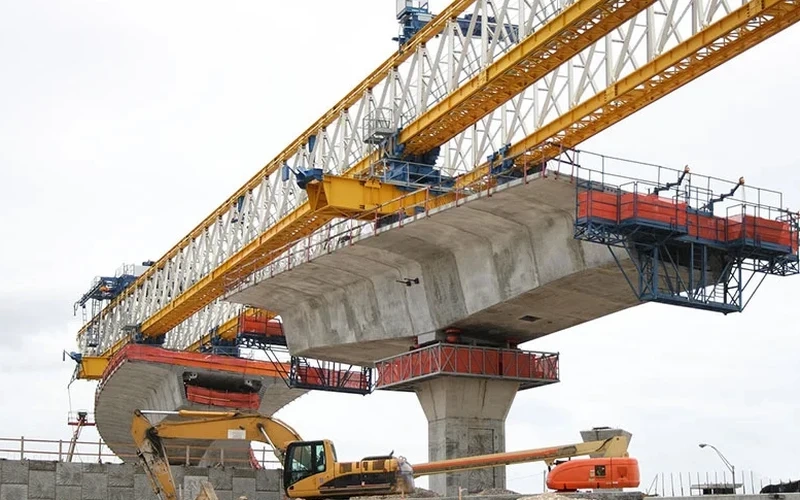
Technical reference image — Markham

Local ground factors

Markham sits roughly 200 meters above sea level, with tunnel alignments often crossing the Oak Ridges Moraine. The stratigraphy here mixes stiff till with soft, compressible silt layers. Groundwater is perched and unpredictable. In a recent collector sewer drive near Unionville, crews hit a buried channel filled with organic silt. The TBM lost face pressure. The repair took three weeks. Our analysis typically includes pore pressure dissipation tests and consolidation parameters to predict settlement before it happens. No surprises during the drive. We deliver the data the project team needs to set the right earth pressure balance from day one.

Need a geotechnical assessment?

Reply within 24h.

Email: info@geotechnicalengineering.co

Reference parameters

ParameterTypical value
Undrained shear strength (Su)15 - 120 kPa (varies with depth and unit)
Sensitivity (St)2 - 8 (moderate sensitivity in silty clays)
Overconsolidation ratio (OCR)1.5 - 4.0 (upper till and clay crust)
Permeability (k)1x10⁻⁹ to 1x10⁻⁶ m/s
Plasticity index (PI)10 - 35%
Compression index (Cc)0.15 - 0.45

Related services

01

Tunnel Alignment Soil Profiling

We log Shelby tube samples every 50 to 100 meters along the drive. Each log identifies unit boundaries, moisture content, and consistency. We map pockets of soft clay against the tunnel face elevation.

02

Triaxial and Consolidation Testing

CU triaxial with pore pressure measurement and one-dimensional consolidation tests. We report effective stress parameters and compressibility for settlement analysis.

03

Groundwater Characterization

Standpipe and vibrating wire piezometer data interpretation. We assess perched water within the till and provide pore pressure profiles for tunnel face stability calculations.

04

Face Stability and Settlement Assessment

Using the lab data, we compute required EPB pressures and predict surface settlement troughs. Deliverables include inputs for Plaxis or FLAC 3D models.

Applicable standards

CSA A23.3 (concrete structures in tunnel linings), ASTM D4767 (consolidated undrained triaxial test), NBCC 2020 (seismic and geotechnical provisions)

Frequently asked questions

What soil types create the most problems for tunneling in Markham?

Interbedded soft silt and clay lenses within the Halton Till. These materials have low undrained shear strength and can squeeze into the cutterhead if face pressure is too low. The transitions between stiff till and soft pockets are the critical zones.

What is the typical cost range for a tunnel geotechnical investigation in Markham?

Depending on the number of boreholes and lab tests required, a full program for a typical utility tunnel alignment in Markham ranges from CA$6,070 to CA$21,020. The final scope depends on tunnel length and depth.

How do you handle groundwater in Markham's glacial till?

We install piezometers during the drilling phase and monitor for at least two weeks. Perched water is common. We report the steady-state pore pressure profile so the TBM operator can adjust face pressure accordingly.

What lab tests are mandatory before a soft ground TBM drive?

At minimum: natural moisture content, Atterberg limits, consolidated-undrained triaxial with pore pressure measurement, and one-dimensional consolidation. Grain size distribution helps classify the till matrix. We often add unconfined compression for quick clay sensitivity checks.
Location and service area

We serve projects in Markham and surrounding areas.

View larger map