← Home · Foundations

Shallow Foundation Design for Markham’s Glacial Soils

Together, we solve the challenges of tomorrow.

LEARN MORE →

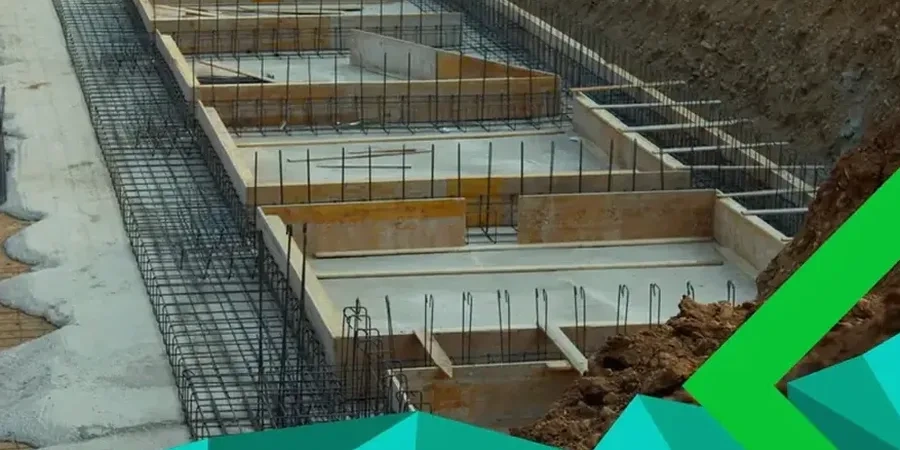
You walk a site in Markham north of Highway 7 and the ground looks solid, but what sits beneath the topsoil tells a different story. The city straddles two distinct geotechnical zones: the dense Halton Till on the Oak Ridges Moraine and the softer glaciolacustrine clays of the former Lake Markham plain. That contrast means a foundation that works perfectly near Main Street Unionville might need a complete redesign just two kilometers east. Our team has been correlating borehole logs across Markham neighborhoods long enough to know that the presumptive bearing values in the Ontario Building Code rarely tell the whole picture. We design shallow foundations—spread footings, strip footings, and raft slabs—that match the actual stratigraphy encountered. Before setting column grids, we often recommend a round of SPT drilling to verify refusal depth, because finding that dense till shelf early can save thousands in over-excavation costs.

In Markham, the difference between a 600 mm and a 900 mm wide footing often comes down to whether the Halton Till lies at 1.8 meters or 2.4 meters below grade—and that’s a call you make with a drill rig, not a guess.

Process and scope

Shallow foundation design here starts with the drill rig, but the real craft happens at the desk when we reconcile SPT blow counts with laboratory shear strength data. A typical Markham project might involve undisturbed Shelby tube samples extracted from the silty clay layer between depths of 2 and 5 meters. Those samples go through consolidated-undrained triaxial testing under CSA A23.3 protocols to give us the drained and undrained parameters we need for bearing capacity calculations. We model the footing geometry in software like Settle3 or PLAXIS, applying the limit states design philosophy mandated by the 2020 National Building Code of Canada. For sites near the Rouge River or tributary ravines where groundwater is shallow, we pair the foundation analysis with a retaining wall evaluation to ensure excavation stability during construction. Every design report includes settlement predictions benchmarked against Burland and Burbidge’s empirical method for granular soils, giving the structural engineer numbers they can trust without padding their safety factors excessively.
Shallow Foundation Design for Markham’s Glacial Soils
Technical reference image — Markham

Local ground factors

We reviewed a three-storey commercial building on Woodbine Avenue where the original geotechnical report assumed uniform stiff clay across the entire footprint. During excavation, the contractor hit a pocket of saturated silt at 3 meters that had never been identified because the initial boreholes were spaced too far apart. The footing subgrade softened within hours of exposure, and the project lost three weeks while the affected zone was over-excavated and backfilled with engineered granular fill compacted in lifts. That single pocket added nearly forty thousand dollars in change-order costs. Markham’s glacial stratigraphy is notoriously lensed—sand and silt seams interbedded with clay are common across the Don River watershed deposits. A shallow foundation design that skips closely spaced investigation points or ignores seasonal groundwater fluctuation risks differential settlements that crack partition walls and bind doors. The Canadian Foundation Engineering Manual explicitly warns against applying textbook bearing values without site-specific verification, and our experience across Markham’s subdivisions reinforces that caution every season.

Need a geotechnical assessment?

Reply within 24h.

Email: info@geotechnicalengineering.co

Video resource

Reference parameters

ParameterTypical value
Footing types coveredIsolated, strip, combined, and mat/raft foundations
Design codeNBCC 2020, CSA A23.3, CFEM 4th Edition
Bearing capacity methodGeneral shear (Terzaghi, Meyerhof, Vesic) with LRFD partial factors
Settlement analysisImmediate + consolidation; Schmertmann, Janbu, and Burland & Burbidge methods
Typical investigation depth1.5x to 2x footing width below base, minimum 4 m in Markham clay plains
Soil parameters inputUndrained shear strength (Su), effective friction angle (φ’), constrained modulus (M)
Report deliverablesBearing pressure maps, settlement curves, reinforcement layout, construction specs

Related services

01

Bearing Capacity & Settlement Design

Complete geotechnical design of spread and strip footings including ultimate and serviceability limit states. We provide bearing resistance maps at planned founding depths, total and differential settlement estimates, and modulus of subgrade reaction values for structural modeling. All calculations follow the limit states design framework in NBCC 2020 and are sealed by a licensed Professional Engineer in Ontario.

02

Subgrade Verification & Field Review

On-site inspection during excavation to confirm that the exposed bearing stratum matches the design assumptions. We perform dynamic cone penetration tests or plate load tests at footing level, check for softening, frost penetration, or groundwater ingress, and issue a field review memo that the municipal building inspector typically requires before rebar placement begins.

Applicable standards

NBCC 2020 – National Building Code of Canada, Division B, Part 4, CSA A23.3:19 – Design of Concrete Structures, Canadian Foundation Engineering Manual (CFEM), 4th Edition, ASTM D1194 / D1195 – Plate Load Test (for verification where required)

Frequently asked questions

What is the typical cost range for shallow foundation design on a single-family home in Markham?

For a standard residential lot in Markham, the geotechnical investigation and shallow foundation design package generally falls between CA$2,570 and CA$4,440. The spread depends on how many boreholes or test pits are needed, whether laboratory strength testing is included, and the complexity of the structural loads. Custom homes on challenging sites near ravines or on the clay plain tend toward the upper end because we sample deeper and model settlement more rigorously.

When can a raft or mat foundation be a better choice than individual footings in Markham?

Raft foundations become the preferred option when the bearing stratum is competent but total settlement under isolated footings would exceed tolerable limits—often the case on the softer glaciolacustrine clays east of McCowan Road. A raft distributes column loads over the entire footprint, reducing differential movement and eliminating the need for deep foundations in many mid-rise residential buildings. We compare both schemes during preliminary design using settlement influence factors and provide a cost-benefit recommendation.

Do Markham building inspectors require a geotechnical field review before pouring footings?

Yes, the City of Markham Building Standards Department almost always requires a sealed geotechnical field review report confirming that the bearing surface is acceptable and free of disturbed or frozen soil before the footing concrete is placed. Our engineer visits the excavation, documents the subgrade conditions with photographs and DCP readings, and issues the memo within 24 hours so the pour schedule stays on track.
Location and service area

We serve projects in Markham and surrounding areas.

View larger map