← Home · Roadway

Flexible Pavement Design in Markham: Balancing Frost and Clay

Together, we solve the challenges of tomorrow.

LEARN MORE →

The weather in Markham doesn’t just swing—it punishes. With winter lows pushing minus 20 degrees Celsius and summer humidity baking the pavement, a blacktop mix that works in Toronto often fails here within three seasons. The culprit is the frost-susceptible silty clay left behind by the glacial Lake Iroquois plain, which covers most of the city’s 212 square kilometers. A standard overlay won’t cut it when the subgrade heaves unevenly. Our team tackles this by designing granular base layers that drain laterally, often tying the structural section to data from a CBR road test to calibrate the modulus of the native till. We don’t guess at layer coefficients; we measure them against the traffic loading expected on arteries like Highway 7.

Markham’s glacial clays lose half their strength in the spring thaw—your pavement section has to be designed for that reality.
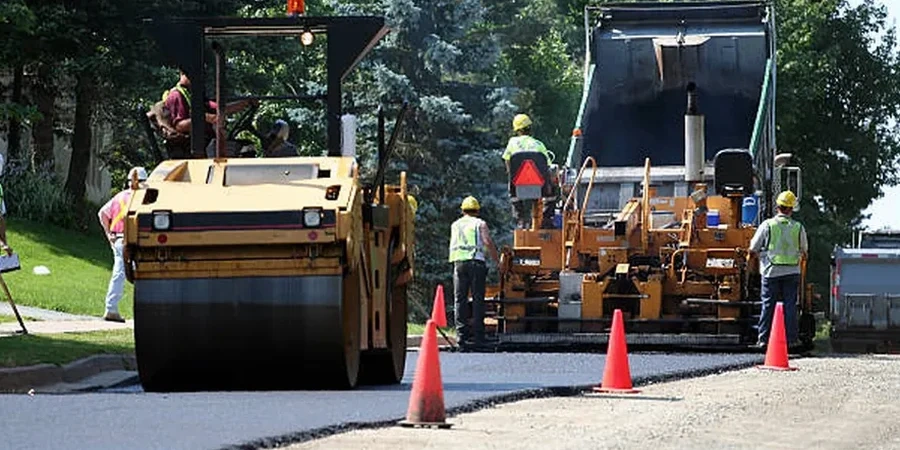
Process and scope

The most common mistake we see in Markham subdivisions is placing a thick asphalt layer directly over a poorly compacted granular base, assuming the binder course will bridge any weakness. That approach ignores the fact that the underlying Halton Till can lose up to 60 percent of its bearing capacity during the spring thaw, right when road restrictions go on. A proper flexible pavement structure here needs a tri-layer system: a high-modulus base, a fatigue-resistant binder, and a wear course graded for thermal cracking. We cross-reference the mix design with the Atterberg limits of the subgrade to verify that the plastic fines won’t pump into the granulars under repeated loading. The result is a section that breathes without rutting, even under the stop-and-go stress at a Markham Centre intersection.
Flexible Pavement Design in Markham: Balancing Frost and Clay
Technical reference image — Markham

Local ground factors

Markham’s transformation from a rural township into a city of 340,000 put immense pressure on its arterial corridors, many of which were originally thin asphalt mats laid over farm lanes. The old roadbeds were never designed for the current truck volumes on Major Mackenzie Drive or the bus rapid transit loads on Enterprise Boulevard. By pushing a flexible pavement design beyond its structural number without addressing the subgrade, a municipality risks alligator cracking that migrates into the base and triggers a full-depth reconstruction within five years. The deeper risk is seasonal: trapped water in the granulars freezes into lenses that lift the pavement unevenly, creating pothole clusters that the York Region maintenance crews can barely keep up with during a hard winter.

Need a geotechnical assessment?

Reply within 24h.

Email: info@geotechnicalengineering.co

Reference parameters

ParameterTypical value
Design traffic (ESALs)1E6 to 3E7 per design lane
Asphalt grade (PG)PG 58-28 to PG 64-28 (Markham climate zone)
Granular base thickness150 to 300 mm (Granular A/B)
Subgrade CBR target6% minimum post-compaction
Frost penetration depth1.2 to 1.5 m (design depth)
Layer modulus (E*)2500 to 4500 MPa (binder course)
Compaction standard98% Modified Proctor (ASTM D1557)

Related services

01

Mechanistic-Empirical Structural Design

We develop layer thicknesses and moduli using traffic forecasts and seasonal subgrade stiffness data, calibrated to ASTM D6926 for hot-mix asphalt and OPSS granular standards.

02

Forensic Pavement Evaluation

For failed road sections we extract cores, run triaxial tests on the base, and map the fatigue cracking pattern to pinpoint whether the failure is structural or material-related.

Applicable standards

ASTM D6926/D6927 (HMA mix design), CSA A23.1/A23.2 (concrete and aggregates reference), ASTM D1883 (CBR for pavement design), OPSS 310 (Ontario granular base specifications)

Frequently asked questions

How much does a flexible pavement design cost for a Markham commercial lot?

Fees typically range from CA$2.290 to CA$6.630 depending on the size of the paved area and the number of traffic load scenarios we need to model. A standard parking lot design with one ESAL category and a single subgrade investigation is at the lower end, while a multi-section arterial with staged construction analysis falls at the upper end.

What’s the biggest design challenge with Markham’s native soil?

The Halton Till sits on the surface across much of the city—it’s a dense, overconsolidated mix of silt and clay that drains poorly. The real challenge is its frost susceptibility. Without a thick enough base to cut the capillary rise, ice lenses form and cause differential heave that tears the asphalt apart by March.

Do you follow the Ontario Provincial Standard for granular bases?

Yes. We specify Granular A and B in accordance with OPSS 1010, and we tie the structural design to the Ontario Ministry of Transportation’s pavement design manual where applicable. For the asphalt layers themselves we use ASTM D6926 mix design procedures to match the PG grade to Markham’s climate zone.

Location and service area

We serve projects in Markham and surrounding areas.

View larger map